

What vermut is, and why two bottles with the same label can taste so different: that is what this guide clears up. Ordering a vermut, easy. Explaining what is in your glass, not so much. Is it wine? Where does that hint of herbs and that bitterness come from? Why can two bottles that say "vermut" taste so different?
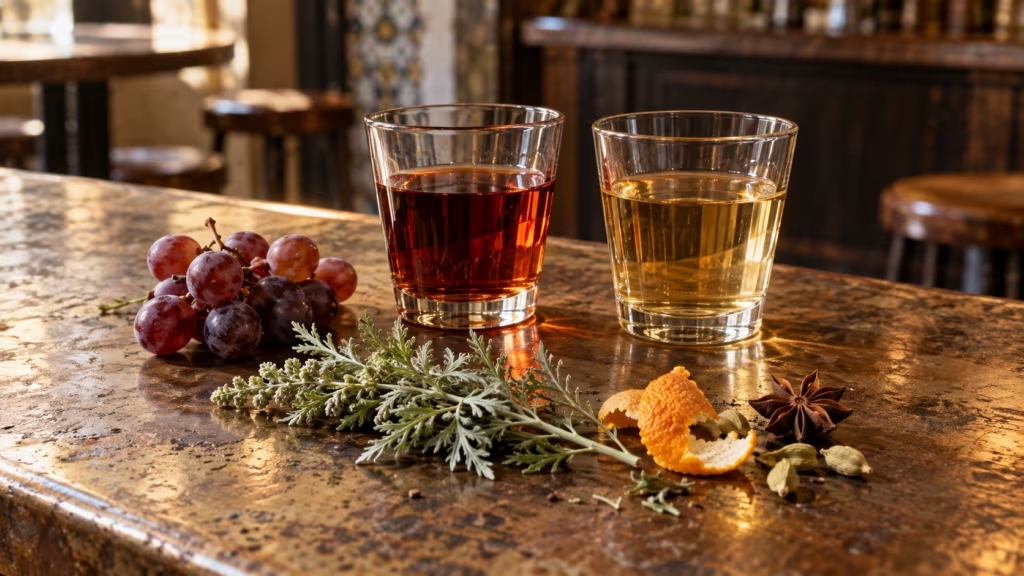
Straight to the point: vermut is an aromatized wine. Wine is the base, and plants from the Artemisia genus, such as wormwood, are added to give it its characteristic flavour. Then each bodega works on its own recipe to add its special, often secret, touch.
What vermut is: wine, herbs and the secret of each house
The European regulation puts vermut in the "aromatized wines" box. Simplifying, it asks for two things: that at least 75 % comes from grapes and that the Artemisia leaves its flavour mark. Of course the regulation also sets other limits, including the alcohol strength.
Within those limits, each producer adds its botanicals, decides how much sweetness, plays with colour. It may or may not add extra alcohol; that is not compulsory... but careful, that does not make it "non-alcoholic": the aromatized wine category already carries a minimum strength by law.
And no, there is no official list of herbs repeated across every bottle. Wormwood tells you the family, not the whole recipe. Nordés, for example, says that theirs uses bay leaf and salicornia. That is what Nordés does, not what "vermut" in general does.
So if someone tells you "all vermuts are made the same way", know that they are making it up.
Where does vermut come from?
Before the vermut we know today there were already wines with plants added to enrich their flavour, wormwood included. Curious, yes. But from there to pointing at an old glass and saying "this is where modern vermut was born" is a long stretch.
The Consorzio del Vermouth di Torino focuses on Turin and Piedmont: that is where vermut slowly came together as an aperitif through the 18th century and took off commercially in the 19th. Better to speak of it "gradually consolidating" than of "so-and-so inventing it one fine day". Round dates look great on a label, but real history is never that clean.
The name has also been on a journey. The RAE accepts both vermú and vermut; it arrived via French and deep down comes from the German Wermut, "wormwood". That explains the word, not where the drink was invented (they are different things, although they get mixed up a lot).
And in Spain, Reus really put in the work: Reus Turisme says that between the late 19th and the early 20th century it came to have around thirty producers and more than fifty brands. Impressive, yes. But that does not make it "the world cradle of vermut", nor does it make all its vermuts taste the same.
Red, white, dry… is it all the same?
Here the menu turns into a mini puzzle. Red and white talk about colour (and sometimes hint at the profile). Dry and sweet talk about sugar. They are two different things. A white vermut does not have to be dry, just as red tells you nothing about how sweet it will be.
The regulation sets levels by sugar: extra dry, dry, semi-dry, semi-sweet and sweet. And note this: "dry" is not "sugar-free", the category already allows for some. Colour, for its part, tells you nothing about the botanicals, the bitterness or how the bottle was made.
All in all, these words are there to start the conversation, not to get it right on the first try. If you remember that you liked a vermut for its citrus character, or that another one felt too cloying, that is already more useful than ordering "a red one" and nothing else. How to serve it and how to choose is another story (we have it in another guide: «How to drink vermut (and which one to order)»).
What vermut is, in the glass
At La Bitácora we have more than 40 references and vermut on tap. There are also non-alcoholic options, and let us be clear: those sit outside the legal definition we have just seen. Have a look at the menu before you come, or just tell us what you usually like when you are here.
You do not need to memorise styles to meet up with friends and order something tasty. A simple "I like mine barely sweet, what do you recommend?" takes you much further than pretending you already know every bottle.