

It fits on a cocktail stick. And yet inside it salt, vinegar and a hint of heat live together. The gilda is the aperitif in miniature: three preserves, one cocktail stick, done. Or almost. Because from an ordinary gilda to a good gilda there is a stretch, and from the traditional one to the modern versions, another. Let us go step by step.
What a real gilda has in it
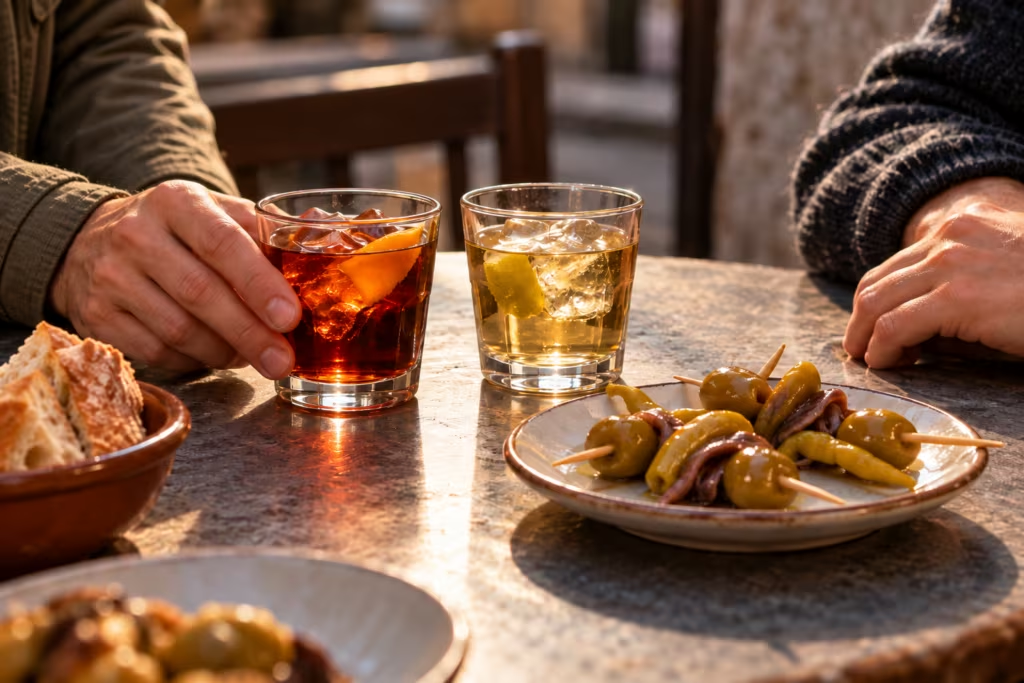
Three things, not one more: olive, salt-cured anchovy and piparra (the Ibarra chilli in vinegar), all threaded onto a cocktail stick. A drizzle of olive oil on top, optional but customary. That is how Turismo Euskadi, tells it, and so does the Cofradía de la Gilda y el Pintxo too, with its nuances: one olive or two, the piparra whole or chopped, each house doing its own thing. What never changes is the trio.
And one thing is clear: the piparra has little heat, at most a gentle touch. If one day it really stings, that is no longer a gilda, it is something else.
Donostia, the 1940s and Casa Vallés
The gilda was born in San Sebastián in the 1940s, and it goes hand in hand with Casa Vallés, which opened in 1942. They themselves say that they used to sell olives, anchovies and chillies separately, until someone had the idea of putting them together on a cocktail stick. And there it stayed. EITB tells the same story. What nobody has is an exact date, so we are not going to invent one for you.
And why is it called "gilda"?
Here we tread carefully, because the story doing the rounds is a lovely one but nobody has been able to document it on paper. It is said that a customer known as Txepetxa was the first to put the trio together, that the others copied him, and that the bite ended up named after the Rita Hayworth film. That new bite was green, salty and a little spicy, and the name of Gilda stuck. Even the Cofradía itself tells it with an "it is said". So do we: it is said. A good story, yes. As an official date of birth, it is no good.
Why it works
You look at the ingredients and the gilda explains itself. The anchovy brings the salt. The piparra, acidity and that heat that never bothers. The olive adds a salty note and a texture that holds the bite together. The olive oil binds it all and gives it richness. The Cofradía recommends eating it in a single bite, so that all the flavours arrive together. There is no magic: it is a small, intense, well-assembled bite. Turismo Euskadi calls it "the aperitif of every bar" and, honestly, it is hard to argue with them.
Which vermut goes well with it
The classic anchovy gilda has character, so it calls for a vermut up to the task. A very good choice is Dos Deus Estrellas: powerful, spiced and with notes of wild herbs, it stands up to the salt curing. For lighter versions, Espinaler Blanco brings freshness rather than weight, with its elegant aroma and its balanced, light and refreshing flavour. Take it for what it is: a considered recommendation, not a commandment.
And then there is the gilda right in front of you at that moment. Does it have more vinegar? A smoky touch? A fattier fish? That changes the equation, and the preparation matters more than the colour of the bottle. If you want a real method for choosing vermut without going in blind, you have it in how to drink vermut (and which one to order).
The gildas at La Bitácora
On the menu we have anchovy, octopus and sardine gildas. If you want to know exactly what is in each one, ask at the bar. And for the vermut to go with it, have a look at the menu or simply tell us what you like: we will help you find the combination. If you want to know where we are and how to get here, here you will find the address and the directions.
The gilda has spent eighty years proving that an aperitif needs no fireworks: a cocktail stick, three well-chosen preserves and someone to share them with. Try, compare, keep whichever works for you. We provide the rest.